
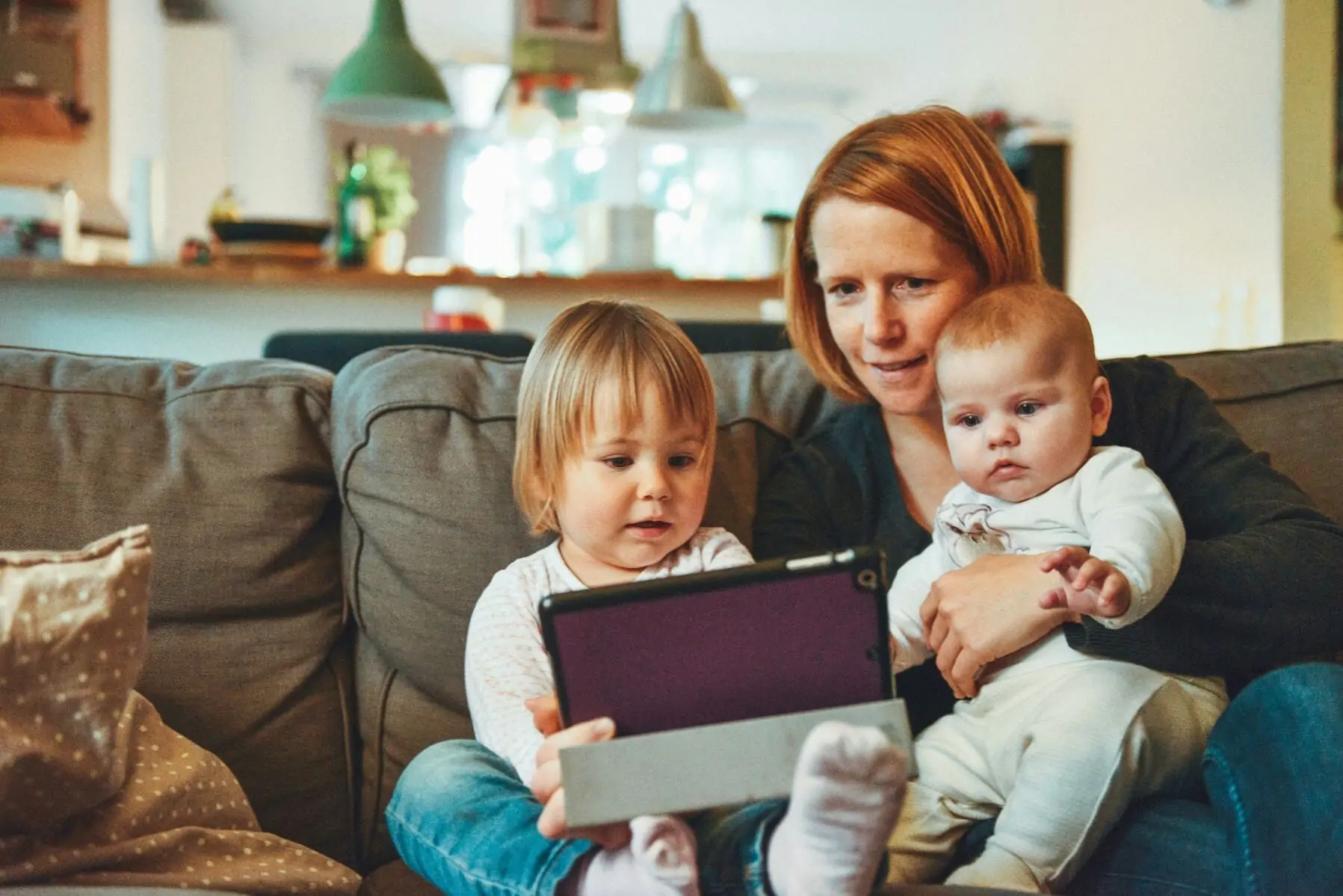
The challenge of raising digital children.
September sees the start of the new school year and all that that entails. This is the time when the usual routines are resumed, classes start again and extracurricular activities are on the agenda.
For many children and adolescents, the free bar of mobile phones, social media and digital screens is over. I must point out that the job of re-establishing limits is always more complicated than it seems, as good use can be overextended to an ABUSE of screens, whatever they may be.
Reviewing and analysing the current evidence on screen addiction and the use of social networks in the adolescent population should be a focus of attention and intervention, for the study in our society and the future of its emotional, behavioural and physiological effects on our children and adolescents.
It is not easy for any parent to establish the barrier of the “limit” and the best way to do it will always be with the involvement and collaboration of the child and carried out in an assertive and progressive manner.
Our children and current pupils are children born into a digital environment, surrounded by technology.
Today’s society, the information and knowledge society, is characterised by the complexity of the industrial and technological world and by a trend towards economic and cultural globalisation.
Therefore, we are required to use all our skills and new personal, social and professional competences to be able to perform effectively and to cope with the continuous changes that are imposed on us.
However, in many cases, the tools we use to achieve these goals are not the most appropriate and only lead to frustration, anxiety or stress, which makes us behave inappropriately both with ourselves and with others, creating a vicious circle that we unfortunately pass on to our children and pupils in the pedagogical field.
The massive use of the internet as a service simplifies people’s lives, however, it brings with it various problems such as the “misuse of networks” and the famous attachment to a screen.
Perhaps one of the reasons why this happens has to do with the little attention that both parents and other actors in society pay to the emotional dimension of children, a dimension that should be educated so that emotions and feelings, which are so important in our lives, become allies and not enemies.
A few years ago, UNESCO published the Delors Report, which refers to the changes in lifestyles in the contemporary world, analyses the tensions that this is causing and proposes solutions and future alternatives for education in the 21st century.
After recommending how we should overcome these tensions, the report goes on to say: “What we are proposing involves transcending the purely instrumental vision of education considered as the necessary way to obtain results (money, careers, etc.) and involves changing to consider the function of education as a whole: the fulfilment of the whole person, who must learn to be.”.
Our society has changed rapidly, so that the lifelong learning that our society imposes on its citizens today is also indispensable for teachers at all levels of education.
Plato said: “The emotional disposition of the learner determines his ability to learn”. Well, if we are concerned about our children’s intellectual development and do our best to improve their level of learning, it is important to remember that, while the intellect may be excellently developed, the emotional control system may not be mature and can sometimes sabotage the achievements of a highly intelligent person.
Emotion is stronger than thought, it can even override it. It is therefore of utmost importance that schools become emotionally literate in order to improve the quality of “EQ education” by creating emotionally intelligent learners.
It is important for children and pupils to understand that emotions are a fundamental part of being human, they determine our behaviour, manifesting themselves through social adjustment, well-being and health of the individual.
Screen addiction or other digital dependencies can currently be defined as the inability of the subject to limit the use of this tool causing significant discomfort in the individual, therefore the acquisition and difficulty to control a behaviour is regularly linked to the reward effect that it can generate in the short term. Moreover, there is evidence that repeated performance of a behaviour, and loss of control over it, can interfere with an individual’s functioning – biologically, psychologically and socially – in a manner similar to substance use disorders (Grant, Potenza, Weinstein, & Gorelick, 2010).
A relevant point is that seeking support online – i.e. online social support – increases the likelihood of developing such an addiction. It is therefore necessary to develop programmes that teach pupils to become aware of the world of feelings, to know how to talk about them, to discover the connections between thoughts, emotions and reactions, and to handle anger, sadness, anxiety, etc. appropriately.
Of course, emotional education requires initial training, but it also requires lifelong learning. This type of education is also important because it can become a non-specific prevention, prevention of stress, depression, interpersonal conflicts, and at the same time it enhances their development as a person.
Unfortunately, as more and more children do not receive secure support in their family environment to get through life, and as many parents do not model emotional intelligence for their children, schools play an important role as the only place where children and adolescents can turn to for guidance in overcoming children’s deficiencies in social and emotional competence.
In recent years, significant scientific evidence has emerged on the ability to improve Emotional Intelligence through well-structured and theoretically grounded Emotional Education programmes. Emotional Education is therefore important and desirable, as it can enhance some of the most valuable psychological resources that people deal with in their lives.
Likewise, Emotional Education in schools must be understood as an essential element for the promotion of an integral personality.
Recent contributions from Neuroscience, Psychoneuroimmunology, Subjective Wellbeing have allowed us to better understand how the brain works in relation to emotions. This is why the application of Emotional Education can be felt in many situations: effective and emotional communication, conflict resolution, decision-making, non-specific prevention (drugs, AIDS, violence, anorexia, suicide attempts, etc.).
Ultimately, it is about developing self-esteem, realistic expectations and developing skills for a flexible and positive outlook on life. All this to ensure greater subjective well-being, which leads to greater social well-being.
So as a society I ask myself: What are we doing to develop the emotional maturity skills of our children and pupils (schools, sports centres and others ….) that will enable them to enhance their academic training and raise their level of social and emotional competence?
Do we equip them with critical thinking and a critical attitude towards internet content? Are they taught to protect their privacy and security?
MERCÈ POMAR
MEDIATOR – FAMILY LAWYER
COACH – CERTIFIED EMOTIONAL INTELLIGENCE
www.mercepomar.com